@Hannibal9972485on X · 2026-10-30
A tamper-evident, on-chain timestamp of what this post said. Captured 2026-10-31 02:30 UTC.
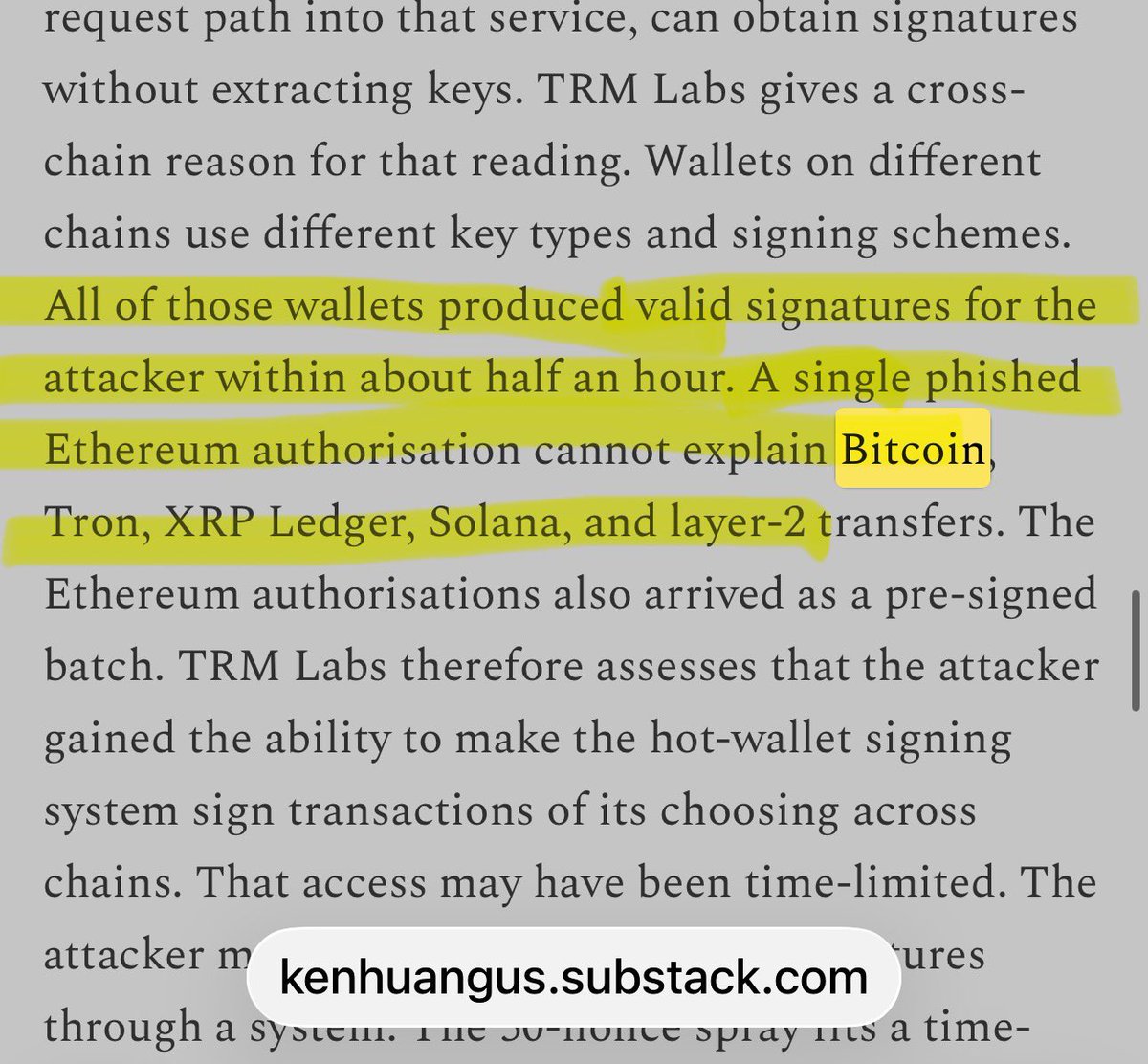
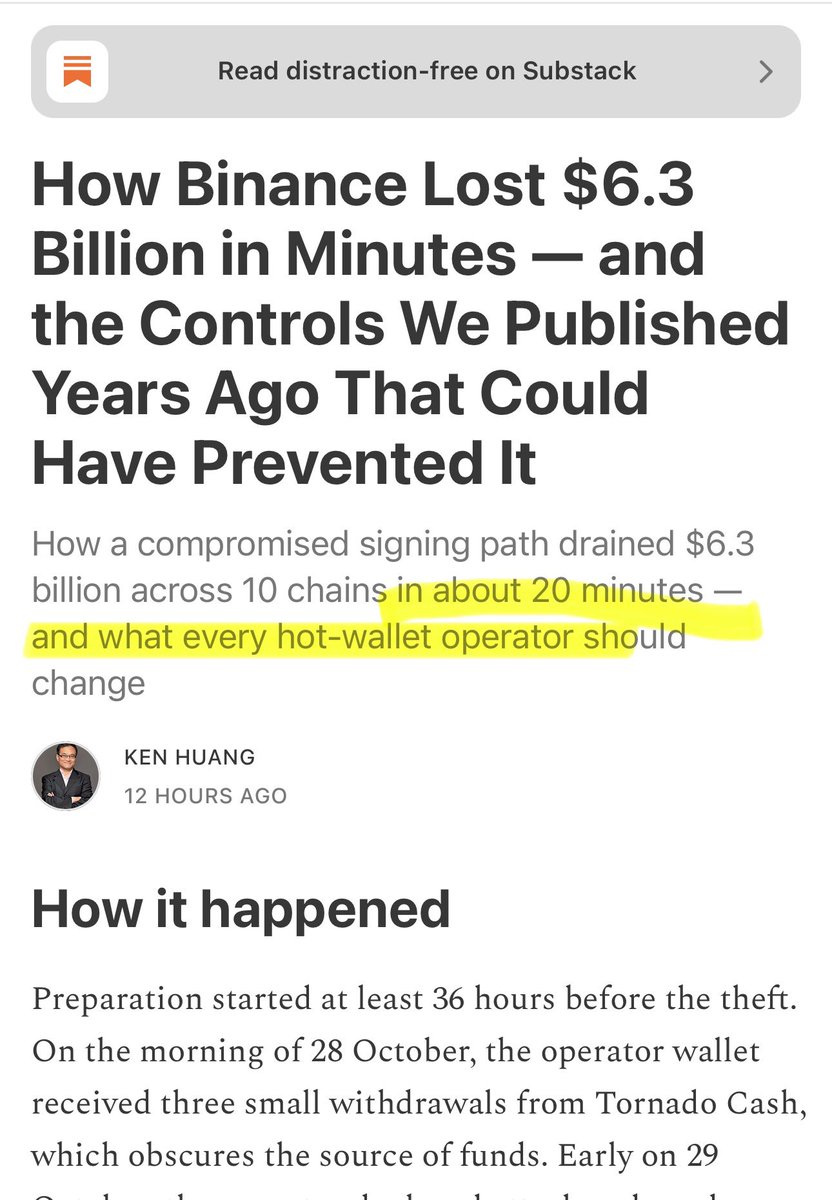
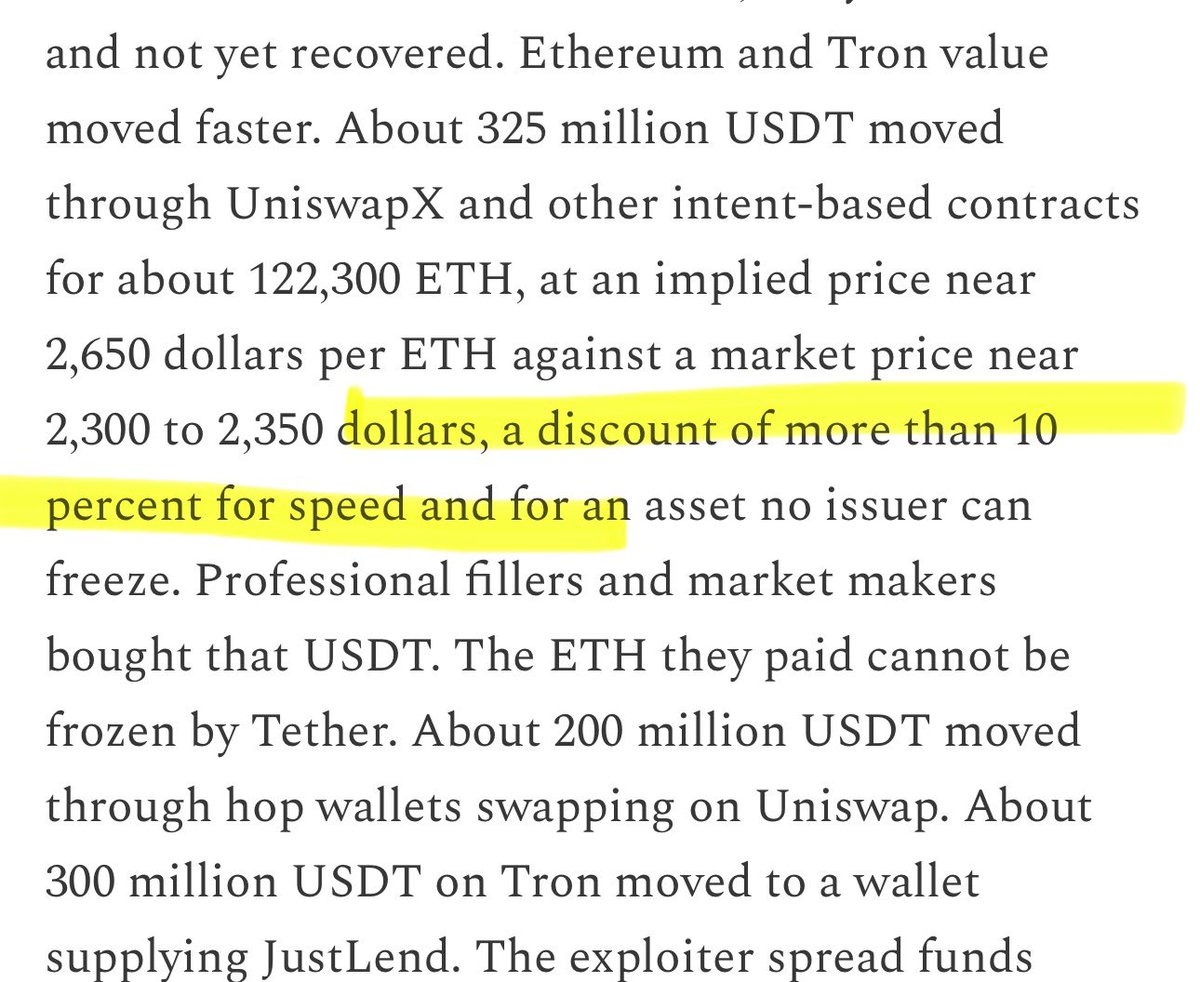
Binance 🚨🚨is balance sheet restructuring & trying to stop a bank run that was likely already forming due to their internal bad debts or fractional reserve practices. . Binance is facing a massive liquidity crisis (maybe due to bad loans, FTX-style internal trading desk losses, or regulatory freezes). They need to lock up $6.3 billion in user funds without admitting insolvency. 🚨 They engineered a "hack" using the EIP-7702 vector. They move the funds to wallets they control. They freeze $3B of it (to stop the bank run on their own exchange) and let $3.3B "escape" into dormant BTC wallets and Uniswap swaps (which are likely wash trades back to their own market makers). They crash the market 4-5% to liquidate short positions and scoop up cheap assets. 🚨 Look at the forensic breakdown of the attack. In the span of 20 minutes, the attacker drained funds across ten different blockchains, including Bitcoin, Ethereum, Tron, Solana, XRP, Optimism, and Avalanche. 🚨 These blockchains do not share the same cryptographic curves or key types. Bitcoin uses ECDSA (secp256k1). Solana uses Ed25519. XRP uses its own variant of ECDSA. A single compromised laptop does not possess the magical ability to sign valid transactions across ten fundamentally different cryptographic architectures in 20 minutes. As TRM Labs explicitly noted in the forensic data, a single phished Ethereum authorization cannot explain Bitcoin, Tron, XRP Ledger, Solana, and layer-2 transfers all occurring simultaneously 🚨 If a real hacker compromised their laptop, they would have to navigate Binance’s internal infrastructure to access 10 separate, isolated hot-wallet signing services, bypassing hardware security modules and multisig requirements for each individual chain. That takes hours or days of lateral movement, not 20 minutes. 🚨 The only entity capable of executing simultaneous, validly signed withdrawals across ten different chains in 20 minutes is the exchange’s own internal automated withdrawal engine —🚨 According to the on-chain data, the attacker took 325 million USDT and swapped it for Ethereum on UniswapX at a 10 percent discount, paying a massive premium for speed. Professional market makers absorbed that trade. Why would an external hacker take a 10 % haircut on an irreversible, unsanctioned swap when they control the wallet? They wouldn't.⚠️⚠️🚨 Furthermore, the Bitcoin stolen was split into exactly 1,000 BTC chunks across 17 new wallets and then sat completely dormant. 🚨 It was not laundered. It was not moved to a mixer. It was organized into clean, institutional-sized blocks and parked. Hackers do not park stolen funds in neat, 1,000 BTC increments. Institutional custodians do this when they are restructuring balance sheets or moving funds to cold storage under their own control.🚨 The attacker even routed test transactions back to itself before the main sweep. This is the behavior of an internal engineer testing a deployment script.🚨 —- Binance is doing exactly what FTX did before its collapse, just with a more sophisticated smokescreen. They have halted withdrawals. They are promising to make users whole with money they do not have. 🚨 Within the next 30 to 60 days, Binance will slowly resume withdrawals for small retail users to maintain the illusion of solvency. Large institutional whales will find their accounts frozen indefinitely pending "investigation" into the hacked funds. The $3.3 billion in Bitcoin and Ethereum currently sitting in dormant wallets will not be recovered. It will be slowly commingled with other exchange flows over the next year to quietly plug Binance's internal holes. 🚨 You are watching a bank robbery designed to hide the fact that the largest exchange on earth is out of money. - https://t.co/rXv2cIejt8 https://t.co/bnfBLIMvFo
Verify it yourself: the manifest is the exact JSON whose
SHA-256 is f0e56a56d490f24f8c09b5c7dc1f6af1d864a1d58fec6c5872404840452621c3; it binds the tweet id, author, post time, and the SHA-256 of the text above. Re-hash the text to match 415f199de84649eedf06ab94cf4d6615299770fdc06c5e007a72a25161933707, and read the anchor transaction's OP_RETURN
bsv.cx / x1 / f0e56a56d490f24f8c09b5c7dc1f6af1d864a1d58fec6c5872404840452621c3 — the block's timestamp proves the post said this at or before that time,
with no trust in bsv.cx. Content archived via the X API.